
Content:
-
- Why a cleaning rota is essential in shared living
- Common causes of cleaning conflicts
- Designing an effective cleaning rota
- Balancing fairness with flexibility
- The key to long-term harmony
- Tools and tricks for keeping everyone on track
- Managing different standards of cleanliness
- Handling rule-breakers and repeated neglect
- When professional cleaning might help
- A rota built on respect and cooperation
Sharing a house can be a rewarding and affordable experience, offering both companionship and a sense of community. However, one of the most common sources of tension in shared living arrangements is cleaning. Dishes piling up in the sink, bathrooms left in disarray, or overflowing bins can quickly turn friendly housemates into frustrated adversaries. The solution many households turn to is a cleaning rota, a structured schedule designed to divide chores fairly. Yet, even the best-intentioned system can fall apart if not managed properly. So, how can you create and maintain a cleaning rota that keeps everyone happy and the house spotless?
Why a cleaning rota is essential in shared living
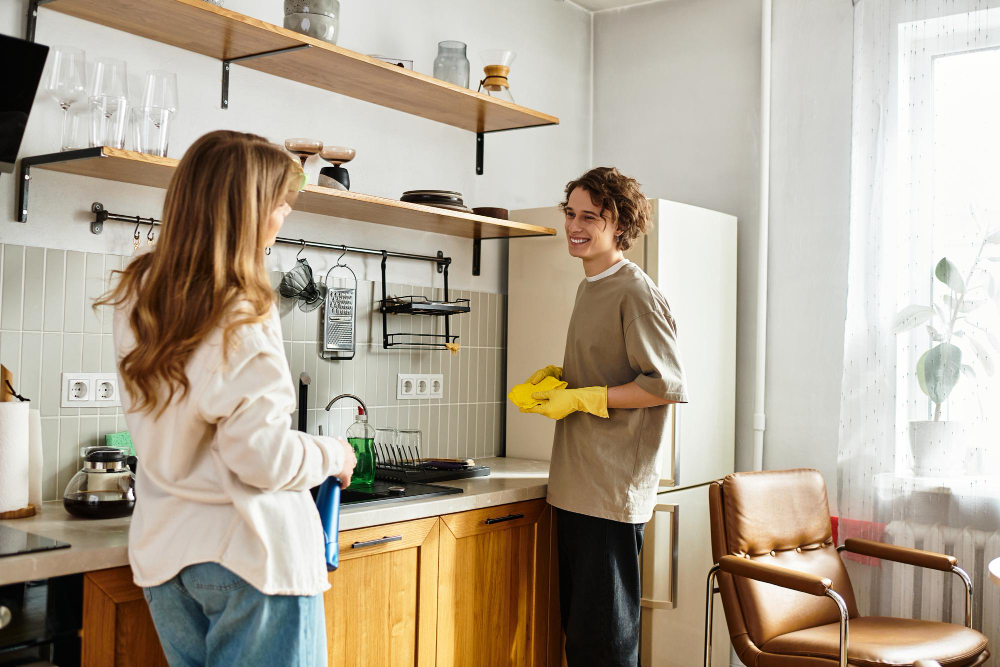
In a shared house, everyone uses the same common areas, like kitchen, living room, bathroom, or hallway. Without a clear agreement on cleaning responsibilities, these spaces can quickly descend into chaos. A cleaning rota helps establish fairness, accountability, and a sense of shared ownership.
Having a rota also removes the awkwardness of constant reminders or passive-aggressive comments. Instead of relying on one person (often the tidiest or most responsible housemate) to take the lead, a well-designed schedule ensures that everyone contributes equally. It becomes a transparent system that eliminates assumptions like “I cleaned last week” or “I thought someone else was doing it.”
However, the key lies not just in creating the rota, but in maintaining it without letting resentment build up, a challenge that requires communication, flexibility, and a dose of diplomacy.
Common causes of cleaning conflicts
Understanding why cleaning disagreements happen is the first step towards preventing them. In most cases, conflicts arise not because people are unwilling to clean, but because of different expectations and habits.
For example, one person’s idea of “clean” may mean spotless surfaces and neatly arranged items, while another might be comfortable with a bit of clutter as long as there’s no visible dirt. Some people clean as they go, others prefer to set aside time once a week. These differences can seem trivial, but in a shared environment, they quickly become a source of irritation.
Other common triggers include:
- Uneven distribution of chores, when one person ends up doing the most time-consuming tasks, like scrubbing the bathroom or cleaning the oven.
- Forgetfulness or procrastination, when tasks are regularly skipped or postponed.
- Lack of recognition, when efforts go unnoticed, leading to frustration among those who consistently uphold their duties.
Recognising these underlying issues helps in designing a rota that anticipates problems before they start.
Designing an effective cleaning rota
The structure of your cleaning rota should reflect the household’s size, lifestyle, and cleaning standards. A one-size-fits-all approach rarely works. The best rotas are simple, flexible, and easy to follow.
A good starting point is to hold a house meeting to discuss expectations. Everyone should have the opportunity to express their preferences and limitations. Perhaps one housemate works night shifts and can’t vacuum during the day, or another has allergies and shouldn’t handle certain cleaning products.
Once you’ve gathered everyone’s input, you can create a rota that divides chores fairly. Typical cleaning tasks might include:
- kitchen - wiping surfaces, cleaning the hob, taking out rubbish, mopping floors,
- bathroom - scrubbing the toilet, shower, and sink, replacing towels, disinfecting handles,
- living room - dusting, hoovering, tidying shared areas,
- hallways and stairs - sweeping, wiping banisters, removing clutter.
These can then be rotated weekly so that no one is stuck with the same unpleasant task for too long. Keeping the schedule visible, for example, on a whiteboard in the kitchen or a shared digital document, encourages accountability.
Balancing fairness with flexibility
While fairness is the cornerstone of any rota, flexibility is what keeps it from collapsing. Life happens, people go on holiday, get ill, or have busy weeks. A rigid rota that doesn’t accommodate these realities will only lead to frustration.
Establishing a system for swapping duties can prevent arguments. If one person can’t complete their task on time, they should be able to switch with someone else, provided there’s communication and agreement. This fosters cooperation rather than blame.
It’s also wise to allow for occasional imperfections. A rota should aim for consistency, not perfection. Missing one week isn’t the end of the world if everyone generally sticks to the plan.

The key to long-term harmony
Even the most detailed rota will fail without open and respectful communication. The success of shared living depends on people being able to talk honestly about issues before they escalate.
Set aside time for brief check-ins, maybe once a month, to review how the system is working. Is everyone happy with the distribution of tasks? Are certain chores taking longer than expected? Regular discussion helps fine-tune the rota and reminds everyone of their shared responsibility.
If problems arise, it’s best to address them calmly and directly rather than letting resentment fester. Avoid accusatory language like “You never clean!” and instead focus on solutions: “I noticed the bathroom hasn’t been cleaned this week, do you want to swap tasks or should we reschedule?”
Creating an environment where feedback is welcome rather than confrontational can make all the difference in maintaining peace.
Tools and tricks for keeping everyone on track
In the digital age, there’s no need to rely solely on a paper rota stuck to the fridge. Technology can make household management easier and more engaging.
Mobile apps like OurHome, Tody, or Splitwise allow you to assign tasks, set reminders, and even track completion. These tools introduce an element of gamification, earning points or rewards for completed chores can motivate everyone to stay consistent.
For those who prefer a traditional approach, visual cues work wonders. Colour-coded charts or magnetic boards in shared areas keep the rota visible and eliminate excuses like “I didn’t know it was my turn.”
Sometimes, setting small incentives can also help. Agreeing to treat the household to a takeaway once a month if everyone sticks to the rota may seem trivial, but it reinforces teamwork and shared satisfaction.
Managing different standards of cleanliness
Not everyone has the same definition of “clean.” One person might vacuum daily, while another is content as long as there’s no visible mess. This difference in perception is often the root of tension.
The best way to address this is by agreeing on minimum standards at the outset. This doesn’t mean imposing perfectionism but setting basic rules that everyone can follow, such as:
- The kitchen should be wiped down after each use.
- Rubbish should be taken out once the bin is full.
- The bathroom should be disinfected weekly.
These simple agreements prevent misunderstandings and ensure that the house remains comfortable for everyone.
When disagreements about cleanliness arise, compromise is key. If one person values extreme tidiness, while another prioritises practicality, the goal should be balance, a clean but liveable space.
Handling rule-breakers and repeated neglect
Unfortunately, not every housemate will be equally committed to the rota. There will always be someone who “forgets” or consistently avoids their turn. How you handle this situation will determine whether your household remains harmonious or ends in conflict.
The first step is always communication. Sometimes, reminders are enough, people get busy or simply lose track of time. However, if neglect becomes a pattern, the group should have a conversation to reset expectations.
Avoid creating hostility through blame or sarcasm. Instead, focus on the collective goal of keeping the space pleasant. If all else fails, you can consider practical measures, such as rotating the easiest tasks toward the less committed member or adjusting rent contributions if cleaning becomes consistently unequal, though this should be a last resort.
When professional cleaning might help
In some cases, the easiest way to prevent arguments is to remove the problem altogether. Hiring a professional cleaner once or twice a month can relieve pressure on housemates and ensure the property remains hygienic.
This doesn’t eliminate the need for daily tidying, but it does handle the heavier chores like bathroom scrubbing, oven cleaning, and dust removal. The cost can be shared evenly, and many housemates find that it’s a worthwhile investment in both cleanliness and peace of mind.
A rota built on respect and cooperation
A shared house cleaning rota is more than a list of chores, it’s a tool for building respect, cooperation, and community. When designed thoughtfully and supported by open communication, it prevents conflict and creates a balanced environment where everyone feels responsible.
Conflicts usually arise not from laziness, but from mismatched expectations and poor communication. By setting clear standards, maintaining flexibility, and addressing issues early, housemates can turn what is often a source of frustration into a system that works smoothly for everyone.
Ultimately, the best cleaning rota isn’t the one that’s the most detailed or strict, it’s the one that reflects fairness, understanding, and mutual respect. When everyone contributes equally and communicates honestly, shared living becomes not just manageable, but genuinely enjoyable.
CLEANING 4 U CAMBRIDGE
Need help with cleaning?
Check out our commercial and home cleaning services. Choose professionals and choose quality!